Connected Tile Puzzle
Reviews
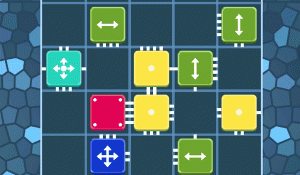
Connected Tile Puzzle delivers a straightforward but absorbing challenge: rotate and slide tiles until every loose end connects. The absence of timers makes it ideal for players who enjoy unhurried spatial reasoning. Procedural generation ensures fresh layouts, though the core loop stays consistent. Multiple modes add variety, but the game's depth depends on how much you enjoy planning moves without pressure. Best suited for casual puzzle fans and those who like logic exercises.
Description
Building a Seamless Network
Every tile on the board has loose ends that must meet the ends of adjacent tiles. Your task is to move, rotate, and slide these pieces until all connections are complete and no gaps remain. The board starts as a jumble of mismatched ends; each successful link brings you closer to a fully connected grid. Because the puzzles are procedurally generated, the arrangement and complexity change with every session, so you cannot rely on memorized solutions.
Controls and Interaction
Dragging a tile moves it to a new position. Tapping or clicking a tile rotates it in place. Sliding lets you shift tiles along rows or columns. These three actions form the entire control scheme, and they respond immediately to touch or mouse input. The challenge lies in planning sequences: rotating a tile might align one end but break another connection you already made. Careful observation of each tile's loose ends helps you decide which action to take next.
Modes and Progression
The game includes multiple modes that introduce different board layouts or connection rules. Some modes may present larger grids, while others might alter how ends can join. As you progress, puzzles grow more complex, requiring longer chains of moves and more foresight. There are no timers or pressure, so you can solve each puzzle at your own pace. The difficulty curve is designed to accommodate both beginners and experienced players, with early puzzles offering manageable sections and later ones demanding deeper spatial reasoning.
Approaching a Puzzle
Start with smaller sections of the board to build confidence. Look for tiles that have only one possible connection and place them first. Rotate tiles frequently to explore all possible alignments. If you get stuck, taking a break and returning with fresh eyes often reveals a connection you missed. These habits help you solve puzzles more efficiently and enjoy the process without frustration.
Compatibility
Faq
Does Connected Tile Puzzle have a time limit?
Are the puzzles the same every time you play?
What is the main goal in Connected Tile Puzzle?
Can I play Connected Tile Puzzle on a touchscreen?
Are there different difficulty levels or modes?
What skills does Connected Tile Puzzle help improve?
Games You Might Enjoy

2048 Link Merge Puzzle

Egg Drop Puzzle Adventure

Snow Land Escape Puzzle
Cubeform Arcade Runner

Rat Village Puzzle Escape

Color Link Puzzle Challenge

Wednesday Dance Moves
Rotate Gravity Puzzle Game
Archery Home Escape Puzzle

Duck Key Quest: Puzzle Adventure
Combine Gear Idle Puzzle
Editorial Notes