Hue Runner: Color Path Challenge
Reviews
Hue Runner: Color Path Challenge strips the arcade formula down to observation and timing. The ball moves on its own, so the only input is a tap at the right moment against a matching color. That simplicity makes it approachable, and the endless mode with gradually alternating walls and shifting ball colors gives skilled players a reason to chase higher scores. The clean visuals and immediate feedback support the core loop well. Its main limitation is variety: the experience is one mechanic repeated, which suits short sessions more than long ones.
Description
Matching Colors Under Pressure
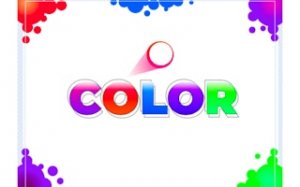
Hue Runner: Color Path Challenge builds its entire experience around one repeated decision. A ball moves automatically along a fixed path, and walls ahead are split into colored sections. The ball itself carries a specific color. The player taps the screen at the moment the ball aligns with a wall section of the same hue. A correct match lets the ball pass through; a mismatch ends the run immediately. That observe-time-tap loop is the whole game, and it stays consistent from the first second to the last.
Minimalist Visuals, Immediate Feedback
The presentation is deliberately clean. The ball, path, and walls are distinct shapes, and the colors are bright and saturated so different hues are easy to tell apart. The interface shows only the current score, which keeps attention on the moving ball rather than on menus or counters. When a match succeeds, the feedback is immediate, confirming that the tap landed at the right moment and reinforcing the timing the player just used.
How Difficulty Rises
Early walls use a single color, giving the player room to learn the basic timing. Later walls alternate between colors, which forces faster decisions about which segment to target. The ball's color can also change after a successful pass, so players must keep re-reading the ball rather than settling into one rhythm. There are no discrete levels; the game runs in endless mode, and difficulty ramps up over time as sequences become less predictable.
Short Runs, Repeatable Goals
Sessions are short by design, which suits quick breaks. The main motivation to continue is beating a personal high score, and the random color sequences mean no two runs unfold the same way. Because control is limited to a single tap, improvement shows up in small, measurable ways such as longer streaks or faster reactions. The game is built around hand-eye coordination and reaction time, and that focus is what gives repeated attempts their purpose.
Compatibility
Faq
What exactly do I tap in Hue Runner: Color Path Challenge?
Does Hue Runner have levels or a campaign?
Why does the ball change color during a run?
Is Hue Runner: Color Path Challenge good for short sessions?
What skills does Hue Runner: Color Path Challenge train?
How does the game keep runs from feeling identical?
Games You Might Enjoy
Mario Jigsaw Puzzle

Friday Night Funkin vs Isaac Rhythm Showdown
Rat Village Puzzle Escape
Color Bubble Puzzle
Happy Balls Physics Puzzle

FNF Rhythm Arcade Challenge
Steve vs Creeper Music Showdown
Cubeform Arcade Runner
Bubble Clear Puzzle

Deer Aim Challenge Arcade
Combine Gear Idle Puzzle

Editorial Notes