Gravity Station 2
Reviews
Gravity Station 2 builds its puzzles around one strong idea: a laser that redefines which way is down. That mechanic turns ordinary rooms into spatial challenges where walls and ceilings become paths. The early levels teach gently, then spikes and gaps force you to think several moves ahead. Controls stay accessible, and the android's colorful world keeps the mood light. It suits puzzle fans who like experimentation, though action-oriented players may find the pace slow.
Description
Core Gravity Mechanic
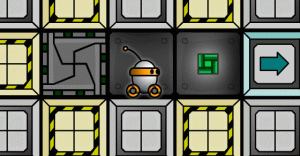
Gravity Station 2 gives you one unusual tool: a laser that changes the direction of gravity. Aim and fire with a mouse or touchscreen, and the android will fall toward whichever surface the beam hits. Walls and ceilings become walkable floors. This single rule drives every puzzle, because the path to a chip often requires flipping gravity more than once.
Room Objectives and Obstacles
Each room hides a set of computer chips. Collecting all of them unlocks the exit, but the route is rarely direct. Spikes and gaps punish careless movement, so you must study the layout before firing. A chip might sit on a ceiling that only becomes reachable after rotating gravity twice. The challenge comes from sequencing those rotations without stepping into a hazard.
Controls and Approach
Controls stay simple: point, shoot, move. The depth is in planning. Because gravity affects every surface equally, you can experiment with different angles to find hidden paths or shortcuts. Rushing usually leads to mistakes, while observing the room first often reveals a cleaner solution. The game starts gently and adds complexity as you progress.
Presentation and Audience
Colorful graphics and a charming android character keep the tone light. The design is family-friendly and accessible, but the later puzzles demand real timing and logic. If you enjoy physics-based brain teasers that reward experimentation, this one fits. [IMG_1]
Compatibility
Faq
How does the gravity laser work in Gravity Station 2?
What do I need to do to finish a level?
Is Gravity Station 2 suitable for children?
What kind of obstacles will I face?
Do I need to be good at action games to enjoy this?
How difficult does the game get?
Games You Might Enjoy
21 Chain Card Puzzle
Warm Room Exit Puzzle
Dynamic Scale Parkour Quest
Fair Share Logic Challenge
Adam and Eve 5: Logic Quest

Sphere Toss 3D Puzzle

Logic Rescue Puzzle

Ice Cream Mystery 2 Puzzle Quest

Friendly Creatures Jigsaw Puzzle

Bubble Pop Puzzle Quest

Color Match Roller Arcade

Editorial Notes