Hue Runner: Stickman Dash
Reviews
Hue Runner: Stickman Dash is a casual arcade runner built around two linked tasks: growing a stickman crowd and switching its color to clear barriers. Numbered gates force risk decisions, while moving hazards test timing. The clean visual style keeps the action readable. It suits players who enjoy short, replayable runs with a light strategic layer. The main limitation is that the input does not describe long-term progression beyond score chasing and course variations.
Description
Color Matching and Crowd Control
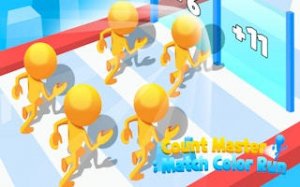
Hue Runner: Stickman Dash centers on a moving group of stick figures. Your job is to keep that group alive and growing. The core action is color switching: when a barrier appears, you must change your team's color to match it. Only then can the group pass safely. At the same time, you collect additional stick figures that share your current hue, so the crowd grows as long as you stay on the right color. This loop of gathering and switching creates a rhythm that rewards quick reading of the course ahead.
Numbered Gates and Risk Decisions
Courses include numbered gates that directly change your crowd size. Passing through a gate with a higher number adds stick figures to your group; a lower number removes some. Because a larger crowd can lead to greater rewards at the end of a run, choosing which gates to prioritize becomes a real decision. Sometimes the safer path keeps your numbers steady, while a riskier gate might boost your total or cut it down. That tension between collecting and avoiding obstacles keeps each attempt from feeling automatic.
Obstacle Timing and Variety
Hazards come in both static and moving forms. Some are simple color barriers that demand an immediate switch. Others, such as swinging pendulums or rising spikes, test your ability to dodge while keeping the crowd intact. The arrangement of gates and hazards changes each time, so no two runs follow the same pattern. That variation means you cannot rely on memorized routes; instead, you learn to read visual cues and react under pressure.
Visual Clarity and End-of-Run Payoff
The game uses a clean, colorful look with bright backgrounds and clearly defined character models. Stick figures are easy to tell apart, and color changes are signaled with smooth animations. The interface stays uncluttered, which helps you scan the course at a glance. When you complete a run, your assembled crowd merges into a single large figure that smashes through large structures. Points from that demolition feed into a score, giving you a reason to replay and aim for a better result.



Editorial Notes