Precision Drift Racing Game
Reviews
Precision Drift Racing Game narrows arcade racing down to one skill: holding a controlled drift through corners while collecting checkpoints and dodging barriers and cones. The single drift button keeps controls approachable, but later levels tighten turns and add hazards, so the difficulty curve rewards practice rather than new abilities. Quick sessions and a non-violent format suit players who want a precise, replayable challenge. The main limitation is variety: the game leans on the same drift-and-dodge loop throughout, so players seeking track gimmicks or vehicle options may find it narrow.
Description
Track Design and the Drift Line
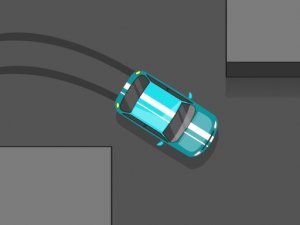
Precision Drift Racing Game hands players a fast car and a course packed with barriers, cones, and checkpoints. The defining challenge is not simply reaching the finish line but holding a controlled drift through corners. Tighter turns appear as players advance, so the racing line changes from level to level. A corner that rewards a wide entry early on may demand a late, sharp drift later, forcing drivers to read each track before committing to a line.
Controls and the Drift Button
Steering uses keyboard arrow keys or on-screen controls, and a dedicated drift button handles sharp, controlled turns. That single button carries most of the game's depth. Pressing it at the wrong moment sends the car wide or into a barrier; pressing it at the right moment preserves speed through a corner. Because touching an obstacle usually ends the run, every drift is a calculated risk rather than a flourish. The controls are simple to learn, but the drift mechanic is where skill separates players.
Checkpoints, Obstacles, and Run Structure
Each level asks players to drive through a series of checkpoints while avoiding hazards. Checkpoints mark progress and may be required to complete a level, so skipping one can invalidate an otherwise clean run. Obstacles are placed to punish careless lines: cones narrow the usable road, and barriers sit near corner exits where an overcorrected drift would carry a car off course. The result is a short, replayable loop where a single mistake resets the attempt and encourages immediate retries.
Difficulty Curve and Audience
Difficulty rises through tighter turns and denser hazard placement rather than through new mechanics. That keeps the game accessible to beginners while giving experienced players a reason to refine their technique. Sessions are quick, which suits players who want a focused arcade challenge rather than a long campaign. The non-violent racing format and straightforward controls make it broadly approachable, though the precision demanded at higher levels will appeal most to players who enjoy mastering a single skill.





Editorial Notes